


What Is a Sound Bath — and How Does It Help Relaxation?

A sound bath is a live, immersive meditation experience where you are surrounded by layers of resonant sound. There’s no water involved — the “bath” refers to being bathed in sound.
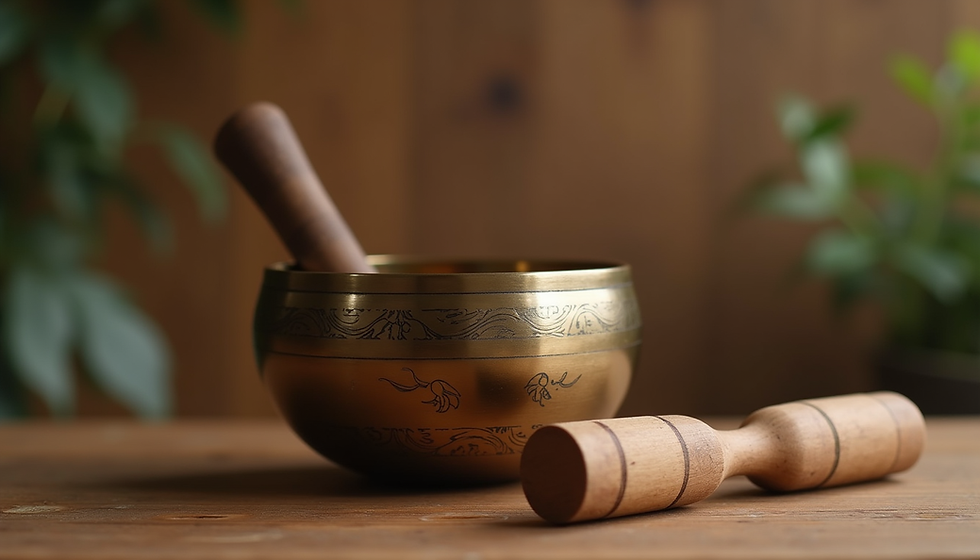
You rest comfortably while instruments like crystal singing bowls, Tibetan bowls, chimes, gongs, or gentle percussion are played in a slow, intentional way. The sounds aren’t songs with lyrics or strong rhythms. They’re sustained tones that rise, overlap, and gradually dissolve.
You don’t have to do anything. You don’t have to focus hard. You simply listen.
Over time, something begins to shift.
What Actually Happens During a Sound Bath?

A typical sound bath can include:
A brief grounding or breathing moment at the beginning
45–75 minutes of live sound
A quiet integration period at the end
Participants usually lie down (or sit upright if preferred) while the facilitator moves through different instruments. The tones are layered intentionally — some grounding, some bright, some expansive.
The experience is passive but not dull. Many people describe it as:
Deeply restful
Mentally spacious
Emotionally releasing
Physically heavy or floaty
Every nervous system responds a little differently.
How Does a Sound Bath Help Relaxation?
Relaxation isn’t just “feeling calm.” It’s a physiological shift.
When you’re stressed, your body is in sympathetic activation (fight-or-flight). Muscles tighten. Breathing becomes shallow. Thoughts speed up.
Sound baths support the opposite response.
1. They Encourage Parasympathetic Activation
Long, steady tones signal predictability to the brain. When the auditory environment feels safe and consistent, the nervous system begins to downshift.
Breathing slows.Heart rate steadies.Muscle tension softens.
This is the parasympathetic response — often called rest-and-digest.
2. They Reduce Cognitive Load
Silence can feel intimidating when your mind is busy. But sustained sound gives your attention something gentle to rest on.
Instead of trying to “clear your mind,” you simply notice sound.
That shift reduces mental effort.When effort drops, relaxation follows.
3. They Support Brainwave Slowing
The brain naturally synchronizes with rhythmic sensory input — a process called entrainment.
While not forcing any specific state, layered tones can gently encourage shifts from active beta waves (problem-solving mode) toward alpha and sometimes theta waves (associated with meditation and early sleep).
This is why sound baths often feel like:
The edge of dreaming
A floating state
Timelessness
You’re not asleep — but you’re deeply settled.
4. They Create Full-Body Sensory Immersion
Unlike music played through earbuds, live sound moves through the air and interacts with the body.
Lower frequencies can feel grounding in the chest or abdomen.Higher tones may feel light or spacious.
This whole-body immersion anchors awareness in the present moment, which is one of the core mechanisms of relaxation.
Is a Sound Bath the Same as Meditation?
It’s a form of meditation — but it’s often easier for people who struggle with traditional silent practice.
You don’t have to control your breath. You don’t have to repeat a mantra. You don’t have to stop your thoughts.
Sound becomes the anchor.
For beginners, this can make meditation feel more accessible. For experienced practitioners, it can deepen immersion and nervous system restoration.
What Does It Feel Like Afterward?
Many people report:
Clearer thinking
Reduced anxiety
Better sleep that night
A sense of emotional lightness
A subtle reset
Not because something was “done” to them — but because their system finally had space to settle.
Relaxation isn’t created. It’s allowed.
Who Benefits Most?
Sound baths can be particularly helpful if you:
Carry chronic stress
Have trouble “turning off” your thoughts
Feel mentally overloaded
Struggle to relax without distraction
Want a guided way into stillness
That said, everyone’s experience is personal. Some sessions feel profound. Others simply feel like a very good nap for your nervous system.
Both are valid.
Final Thoughts
A sound bath is not performance. It’s not therapy. It’s not about belief.
It’s a structured environment designed to help your body and mind move from activation into regulation.
In a world that constantly asks you to do more, think faster, and stay alert — a sound bath offers the opposite:
Permission to stop.
And sometimes, that’s exactly what relaxation needs.


Comments